
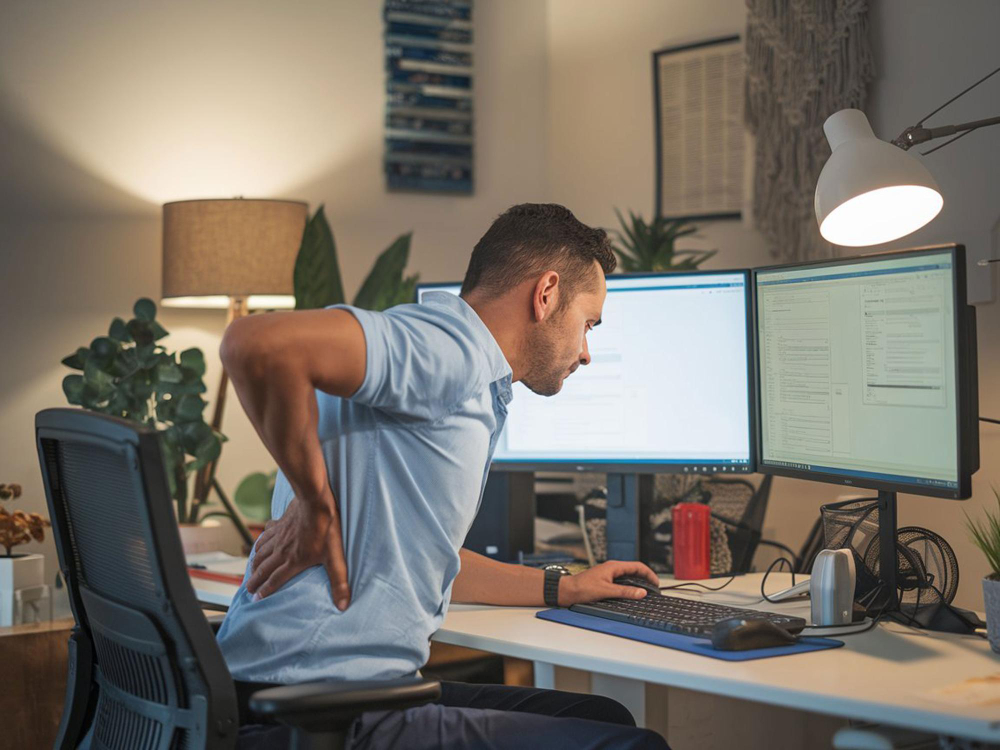
Poor posture and back pain often go hand in hand. Many people spend hours sitting at desks or looking at screens. As a result, they may develop habits that strain their backs. According to the World Health Organization, back pain is a leading cause of disability worldwide. While there are many causes, poor posture is a common and preventable factor. Understanding the link between posture and pain can help you take steps to feel better every day.
What Is Poor Posture?
Poor posture means your body is not in a healthy position when you sit, stand, or move. For example, slouching or leaning forward can put extra stress on your spine. Over time, this can lead to discomfort or pain. Good posture keeps your bones and joints in the right place. It also helps your muscles work well. However, poor posture can develop from habits, weak muscles, or even injury.
How Poor Posture Causes Back Pain
When you sit or stand with poor posture, your spine is not aligned. Because of this, certain muscles must work harder to support your body. Over time, these muscles can become tired or strained. In addition, poor posture can put pressure on the discs between your back bones. This may cause pain or stiffness. For many people, posture correction for back pain can help reduce these problems. Orthopedic advice for posture often includes simple changes to daily habits.
Common Symptoms of Posture-Related Back Pain
Many people notice signs of back pain caused by poor posture. For example, you may feel sore after sitting for a long time. Other symptoms can include:
Sometimes, the pain may come and go. However, if you notice these symptoms often, it may be time to check your posture.
Risk Factors for Developing Poor Posture
Several things can increase your risk of poor posture. For instance, sitting for long hours at a desk can make it harder to keep your back straight. Other risk factors include:
Because these factors are common, many people can benefit from back pain prevention tips and posture correction for back pain.
Diagnosing Back Pain Caused by Poor Posture
Doctors often start with a physical exam and questions about your daily habits. They may ask how long you sit each day or if you notice pain after certain activities. Sometimes, your doctor may check your spine and muscles for signs of strain. In rare cases, imaging tests like X-rays may be needed. However, most posture-related back pain can be diagnosed without special tests. Early diagnosis can help you get the right treatment and avoid long-term problems.
Effective Treatments and Therapies
Many treatments can help with posture-related back pain. For example, physical therapy can teach you exercises to strengthen your back and core. In addition, some people benefit from massage or heat therapy to relax tight muscles. Doctors may also suggest:
Because each person is different, your treatment plan may include several steps. Always follow orthopedic advice for posture and back pain management.
Tips for Improving Posture and Preventing Back Pain
There are many simple ways to improve your posture and reduce back pain. For instance, you can:
With these back pain prevention tips, you can protect your spine and feel better each day. If you need more help, seek advice from a healthcare provider or orthopedic expert.
Conclusion
If you have back pain or want to improve your posture, Dr.Vineeth Reddy Mettu is here to help. Schedule a consultation today to get advice and support for a healthier back.
If you have back pain or want to improve your posture, Vineeth Reddy Mettu is here to help. Schedule a consultation today to get advice and support for a healthier back.